

Sambar recipe is a pot of pure, wholesome goodness! Its is a traditional South Indian dish. This recipe for arachuvitta (freshly ground) sambar is perfect for beginners, offering a dish with amazing flavor and the right consistency. While there are many types of sambar, like tangy tomato sambar or the tiffin sambar served with idlis and dosas, this version stands out because of its freshly ground spices.
Follow these simple steps, and you’ll have a flavorful, nutritious bowl of sambar ready to enjoy in no time!

At my home, sambar is a go-to dish that I make at least twice a week. It’s an easy, worry-free recipe that everyone in my family loves, which makes it a perfect choice for busy days. One of the reasons I love making sambar is its versatility. It works for both lunch and dinner. If there are any leftovers after lunch, I can serve it with dosas or idlis for dinner. That’s always a win!
Another great thing about the arachuvitta sambar is that I don’t have to plan ahead or stress about which vegetables to use. I can simply toss in whatever I have on hand. If I’m running low on veggies, no problem—just using shallots alone can create a flavorful, comforting sambar that feels like a hearty lentil stew.
Even if you don’t have your favorite sambar powder stocked up, you don’t have to miss out. You can still enjoy a good sambar by making the freshly ground spices from scratch as per the recipe. It’s such a simple yet satisfying dish that brings comfort and flavor to the table every time.
Sambar is a delicious and versatile dish that comes in many different styles across South India. It’s a type of stew made with lentils, vegetables, and spices. Different regions and families have their own way of making it. Some people use store-bought sambar powder to make it quickly, while others prefer to make their own spice mix at home.
There are many kinds of sambar! One popular version is idli sambar, also known as tiffin sambar, which is often served with soft idlis or dosa for breakfast. Another type is Pappu Charu, a tangy and flavorful version from Andhra Pradesh. And then there’s arachuvitta sambar, a traditional dish from Kerala, just like this recipe.
Arachuvitta sambar is very special because it’s made with freshly ground spices. The spices are blended just before cooking, which gives the dish an amazing aroma and taste. While this version comes from Kerala, people across South India love it too. It’s perfect for making any meal feel extra special!
Sambar is at its best when served with steaming hot rice. There’s something magical about this combination. The warm, flavorful sambar soaks into the rice, turning every bite into pure comfort. But sambar isn’t just limited to rice! Pair it with crispy dosas or soft, fluffy idlis, and you’ll find how their textures perfectly balance the bold, tangy flavors of the sambar.
Now, here’s a little secret to make this meal even better: add a side of bhindi masala. The rich, spiced okra dish adds a delicious twist to the meal, taking it to a whole new level of taste. (If you’re curious, here’s a great bhindi masala recipe.)
Words can only describe so much, but trust me, this combination is a true feast for the senses.
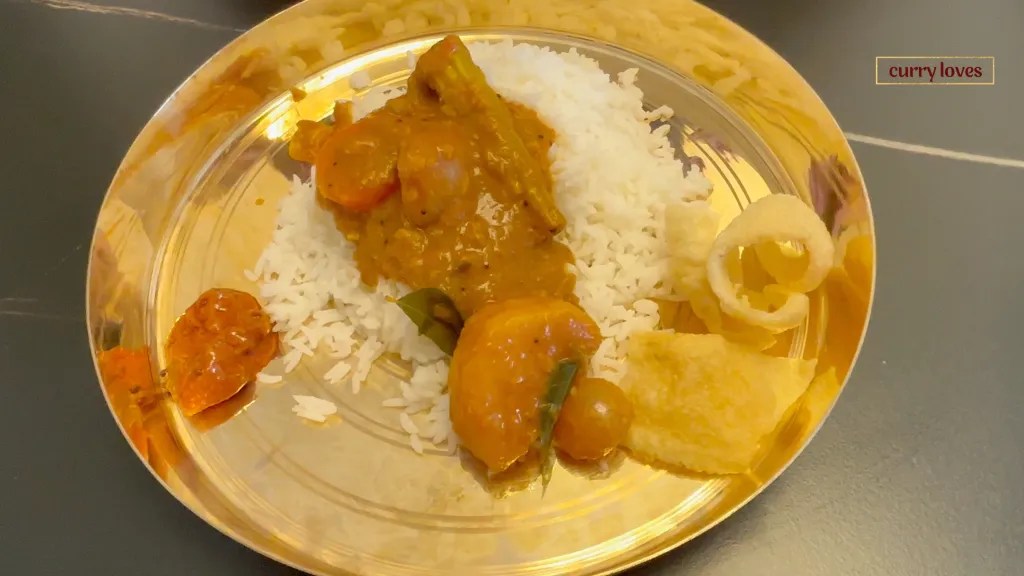
Feel free to customize this dish with your favorite vegetables. Don’t hesitate to experiment. There is no harm in trying something new!
At my house, having sambar means there are always lots of side dishes to enjoy with it. If it’s lunchtime, I serve sambar with plain steamed rice. We usually add something like prawn masala, egg fry, or even prawn cutlets. My all-time favorite side dish, though, is fried dried fish cooked with lots of shallots. It tastes so good! Sometimes, I also make karuvadu thokku, which is a dried fish curry.
We also love having potato masala, vazhakkai fry (plantain fry) bhindi (okra) masala as sides. And no meal feels complete without some mango or lime pickle. Papadums are a must-have too—they’re crispy and so delicious with sambar.
For breakfast or dinner, sambar goes really well with dishes like dosa, uttapam, idli, or medu vada. My mom shared her special recipe for dosa and idli batter with me. Her dosas always turn out crispy, and her idlis are super soft. The best thing is that one batter can be used for both idlis and dosas. I’ve tried it myself, and it works perfectly! I will share the recipe soon so you can try it too.
I’ve already shared recipe links for some of the dishes mentioned, but don’t worry if one is missing. I will post those recipes soon. Stay tuned!
If you don’t have a traditional pressure cooker or just want an easier option, making sambar in an Instant Pot is a breeze! Here’s how you can whip up this delicious South Indian lentil dish:
Start by rinsing and soaking the toor dal for about 30 minutes, then drain it. Switch your Instant Pot to sauté mode and heat up a tablespoon of oil. Toss in some dried red chilies, fenugreek seeds, chana dal, and coriander seeds, roasting them until they smell amazing. Remove those roasted spices. Grind them with grated coconut and a little water into a smooth paste, and set it aside for later.
In the same pot, add the soaked dal, 2 cups of water, a pinch of hing, turmeric, garlic cloves, and chopped tomatoes. Close the lid. Set the Instant Pot to pressure cook on high for 8 minutes. Let the pressure release naturally. Once it’s done, open the lid and add in your vegetables (like shallots, drumsticks, brinjals, carrots, potatoes, and green chilies), the prepared masala paste, tamarind water, and salt. Give everything a good stir. Switch to sauté mode again. Let it simmer for 5-7 minutes until the veggies are cooked and all those flavors come together beautifully.
For the final touch, heat some ghee in a small pan, crackle mustard seeds, add dried red chilies and sliced shallots. Sauté until golden brown. Pour this aromatic tempering over the sambar. Toss in some curry leaves if you prefer, and chopped coriander for garnish, and you’re ready to go! Enjoy!
I want to share a little story that might be a fun tip for getting your kids to enjoy South Indian cuisine. When I was a kid, I used to avoid orange curries and gravies. I thought they’d be way too spicy. But my mum? She wasn’t having it. She’d mix rice with a drizzle of ghee and some sambar loaded with veggies, then pair it with stir-fried tofu seasoned with salt and turmeric. And guess what? That combo totally won me over. I’m not sure if it was her magic touch or the sambar itself, but I fell in love with it. Honestly, mums are the best nutritionists out there. Give it a try with your little ones (or even for yourself!) and let me know if it works its magic for you too!
How to Stop Lentils from Overflowing in a Pressure Cooker
Sometimes, when we cook lentils for sambar in a pressure cooker, the lentils can overflow. This happens even if we add only a small amount of water, like 2 cups for the toor dal in this recipe. When the lentils overflow, the cooker hob can get messy, and cleaning up becomes a big task. But don’t worry—I have a simple solution for this problem!
Here’s what you can do to stop the lentils from overflowing. First, add the lentils, chopped tomatoes, a few garlic cloves, a pinch of hing (asafoetida), and one tablespoon of oil (not ghee, just oil) into the pressure cooker. Then, close the lid, put on the weight, and turn the flame to low. Wait for the first whistle. As soon as you hear it, turn the flame to simmer. Let it cook on simmering heat for 3 to 4 more whistles.
Using this method will stop the lentils from spilling out of the cooker. It will also save you time and effort cleaning the kitchen. Try it the next time you make sambar and enjoy cooking without the mess!
No matter how much we try to follow a recipe, every dish turns out unique based on the person cooking it. It's these little tweaks and changes that make cooking such an adventure and allow us to put our own stamp on a meal. So go ahead and experiment with different veggies in your sambar recipe. Who knows, you might just come up with something truly delightful! Happy Cooking!
Yes, toor dal (pigeon peas) is traditionally used in this recipe for its authentic taste. However, you can substitute it with masoor dal (red lentils) or moong dal (yellow split lentils) if you prefer a slightly different texture and flavor. For a balanced taste and texture, you can also mix toor dal with a small amount of chana dal (split chickpeas). While substitutions work well, toor dal remains the best choice for achieving the classic flavor of the dish.
Common vegetables used in sambar include drumsticks, carrots, beans, radish, eggplant, okra, beans, raw mango and tomatoes. You can mix and match based on availability and preference. Seasonal vegetables also work well.
Sambar tastes best when it is fresh. If you have leftovers, store them in an airtight container in the fridge for 2-3 days. When you want to eat it again, warm it on the stove or in the microwave. You might need to add some hot water to make it less thick, as it tends to thicken in the fridge.
Tamarind gives sambar its special tangy taste. If you don’t have tamarind, you can use lemon juice or dried mango powder (amchur) instead. These substitutes will add a sour flavor, but they won’t taste as authentic like tamarind because each has its own unique flavor.
You can cook dal in a pot on the stove, but it takes longer than a pressure cooker. Soak the dal for at least an hour before cooking. Cook it until it is soft and mushy for the best result.
I'm afraid not, as grated coconut is added to this sambar masala, and it tends to spoil quickly. It's best to avoid storing this sambar masala in advance. Preparing it fresh ensures better safety and flavor.
Sambar is gluten-free because it’s made with lentils, vegetables, and spices. But if you use store-bought tamarind paste or spice mixes, check the labels to make sure they don’t have gluten
Check out these recommended side dish recipes for this sambar!
Sambar is a traditional South Indian dish that is both nutritious and flavorful, making it a staple in many households. It's a hearty lentil-based stew often enjoyed with steamed rice or idlis. The dish is characterized by its rich combination of toor dal (pigeon peas), a variety of vegetables, and a freshly ground spice masala, giving it a tangy and spicy flavor profile. The recipe involves several steps, including roasting spices, cooking dal, and simmering vegetables, all culminating in a tempering of aromatic spices that enhances the taste and aroma of the final dish. Ideal for anyone looking to savor a taste of Southern India, Sambar is a comforting meal that combines the wholesomeness of lentils with the freshness of vegetables and the warmth of spices.

In addition to sharing recipes, my mission with this blog is to create a supportive community where home cooks can come together to share their experiences, ask questions, and learn from each other. I believe that cooking brings people together in a unique and special way.


